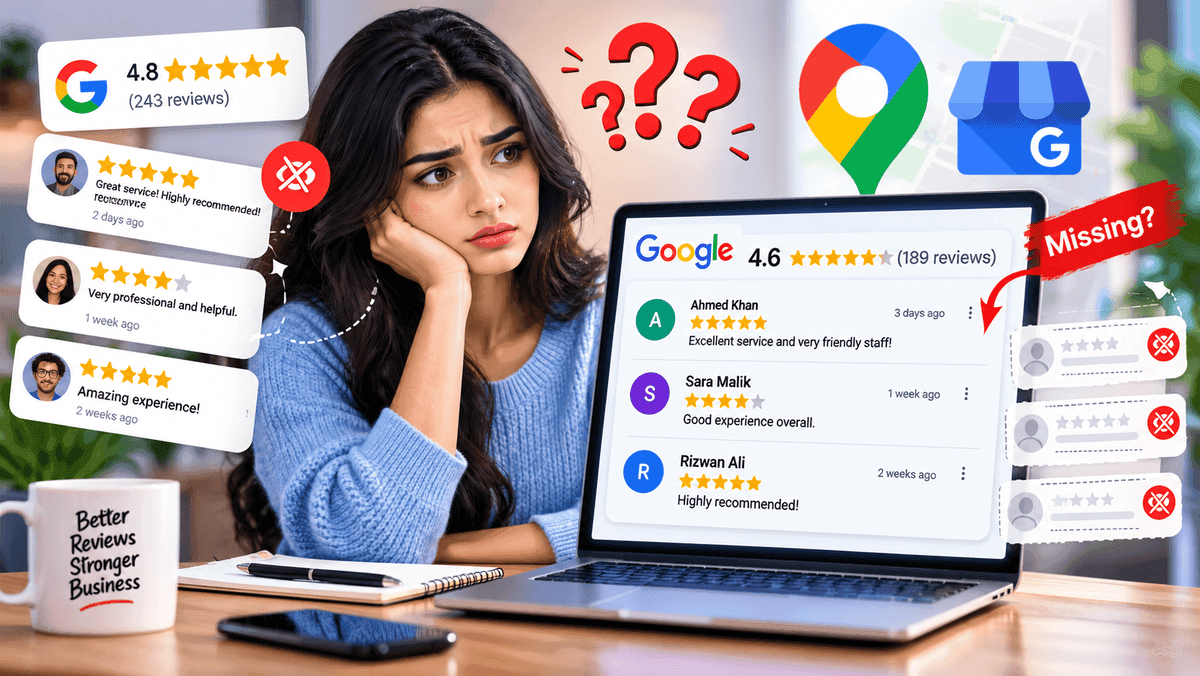


In today’s digital marketplace, a business without reviews is like a shop with no lights on. Shoppers can see the door, but they will not walk in. Public perception now sits between your Google Business Profile and the sale. Before most people call a plumber, book a clinic, or reserve a table, they scan stars, skim recent comments, and decide whether your brand feels safe.
That decision is psychological, not purely rational. Social proof-the instinct to follow what other people already validated-shortens the leap of faith. When enough recent customers describe a good outcome, the brain treats your listing as lower risk. When the listing is empty, stale, or flooded with vague praise, the same brain looks for another pin.
Operators often ask whether reviews “really” move revenue or whether they are vanity. In local search, they do both jobs: they influence who gets the click, and they influence who converts after the click. Across categories we see again and again, stronger public proof can roughly double lead conversion versus a thin or neglected profile-not because stars are magic, but because doubt disappears earlier in the journey.
This guide unpacks the psychology behind that lift, how Google reviews specifically trigger trust, and how to build proof that sells without looking manufactured. For platform context, see Google Reviews vs Trustpilot. When you need paced support for volume, explore Buy Google Reviews.
When you improve social proof, you are not tricking anyone-you are reducing uncertainty. People still judge fit, price, and availability. They simply stop bouncing because the listing felt empty.
What Social Proof Really Means for a Local Listing
Social proof is not a marketing slogan. It is a shortcut the brain uses when information is incomplete. A stranger cannot inspect your back office, your training program, or last month’s quality scores. They can inspect what other strangers said after paying you.
On a Google Business Profile, that shortcut shows up as rating, review count, recency, photo evidence, and owner replies. Each element answers a different fear: Are you real? Are you still open? Do people like me leave happy? Do you fix problems when they happen?
Empty proof forces the shopper to invent answers. Most invent caution. They bounce to a competitor with a living stream of feedback even if that competitor is slightly farther away or a little more expensive.
Strong proof does the opposite. It pre-sells the visit. By the time someone taps Call, they are not hunting for reasons to trust you-they are confirming logistics. That is why social proof can feel like a 2x sales engine: you are not inventing demand; you are unlocking demand that already existed but stalled on fear.
The Zero-Moment Decision on Google Maps
Marketing literature calls the split-second choose-or-scroll moment the Zero Moment of Truth. On Maps, that moment is compressed into a glance at three pins. Shoppers rarely read your full About section first. They compare stars, skim the newest line of text, and decide which panel deserves another second.
Emotion does most of the work. Gold stars reduce anxiety. A recent review that names a service (“same-day coil replacement,” “gentle pediatric cleaning”) creates a concrete mental movie. Generic “great service” lines create none. Specificity is what turns social proof into conversion proof.
Response behavior is part of the same moment. An unanswered complaint sitting on top of the feed signals neglect. A calm, same-day reply signals a reachable operator. People buy from businesses that look supervised.
If your profile ranks but under-converts, the bottleneck is often this psychological layer-not your website speed and not your paid ads. Fix the public story people see before they ever land on your site.
Why Google Reviews Outperform Silent Word of Mouth
Happy customers have always recommended businesses. The difference now is distribution. Offline praise reaches a handful of friends. A public Google review reaches every high-intent searcher in your service area for months.
Google also places that proof inside the discovery surface itself. Trustpilot widgets, testimonial carousels, and PDF case studies help later. They rarely compete with the map pack for the first trust scan. That is why local brands that under-invest in Google reviews leave money on the table even when their offline reputation is excellent.
There is a second asymmetry: unhappy people are more motivated to publish than mildly happy people. Without a deliberate ask system, your public record skews negative relative to reality. Social proof then works against you-accurately reflecting complaint energy, not overall quality.
Closing that gap is operational work: ask at the peak moment, make the link frictionless, reply to everything, and keep fresh feedback arriving so one bad afternoon cannot define the brand. For velocity mechanics, see The Reputation Multiplier.
How Social Proof Translates Into Roughly 2x More Sales
The “2x” claim is not a universal law for every ZIP and category. It is a practical pattern: when two listings receive similar impressions, the one with clearer, fresher social proof often converts at a markedly higher rate-sometimes near double-because fewer shoppers abandon mid-decision.
Think in funnel terms. Impression → pack click → profile dwell → call or direction request → booked job. Reviews influence every stage after the impression. Better CTR into the panel. Longer dwell. Higher call propensity. Shorter sales conversations because trust was pre-built.
A thin 3.9 with stale reviews forces your team to overcome skepticism on every phone call. A living 4.7 with specific recent stories means many callers already decided you are the safe choice. Your close rate rises even if lead volume is flat. That is sales lift without buying more traffic.
Measure it honestly. Track GBP calls, direction requests, form fills, and booked jobs alongside rating and last-review date. If proof improves and bookings do not, inspect offer, capacity, and phone handling-not only stars.
Run a simple before/after: thirty days of calls and booked jobs at baseline proof versus thirty days after fresher, more specific reviews and faster replies. Use your numbers, not a blog slogan, as the scoreboard.
Star Ratings, Review Themes, and the Sweet Spot of Trust
Perfect 5.0 with twenty identical sentences can feel less trustworthy than a 4.6 with varied, detailed stories and a few constructive notes. Shoppers have learned to detect polish that looks purchased. Authenticity is part of the psychology.
Themes matter more than adjectives. Wait time, cleanliness, price honesty, aftercare, neighborhood references, and named services give future buyers a checklist. Encourage customers-and brief any paced campaign-to speak in those themes without cloning a script.
Recency keeps the sweet spot alive. A strong average with no new reviews for six months reads like a museum exhibit. People want proof that quality is current, especially in categories where staff turns over or owners change.
Owner replies complete the picture. Thank specifics. On criticism, acknowledge, take details offline, and avoid courtroom energy. Future customers read your character under stress as carefully as they read your praise.
Building a Social-Proof System That Compounds
Start with listing hygiene: accurate NAP, true primary category, current hours, and photos from the last 90 days. Social proof on a broken panel still loses calls.
Then install an ask: QR codes at the counter, SMS after job completion, short email with a direct review link, and staff language that requests help for other local families-not a bribe for five stars. Never pay for a guaranteed rating. That violates platform rules and trains transactional praise.
Add pacing. A natural drip beats a weekend blast. Match competitor cadence in your map pack without looking unnatural for your size. If happy customers stay silent, a carefully paced campaign can fill the proof gap while organic asks continue.
Finally, instrument the loop. Weekly: new reviews, response rate, median reply time, map actions, and booked jobs. Social proof is a system. Systems get managed. Spikes get forgotten.
Publish the weekly scorecard where ops can see it. Social proof dies when it is only a marketing metric detached from service delivery.
Common Psychological Mistakes That Kill Conversion
Mistake one: assuming ranking alone sells. A top-three pin with sparse reviews still loses the tap to a fourth-place competitor with living proof.
Mistake two: chasing volume without specificity. Fifty “amazing!!!” posts do less conversion work than fifteen stories that name the service and outcome.
Mistake three: ignoring negatives while stacking positives. Shoppers notice the mismatch. Recover publicly, fix the process, then resume growth.
Mistake four: incentivizing five-star language. Discounts-for-stars programs create filter risk and teach customers that praise is a coupon. Ask for honest public feedback instead.
A Practical 30-Day Social-Proof Sprint
Days 1-3: audit the profile, competitor proof levels, and your current ask flow. Fix hours, phone, categories, and broken review links.
Days 4-10: train staff on a two-sentence ask, print QR materials, and launch a same-day follow-up SMS or email for completed jobs.
Days 11-20: reply to every open review, upload fresh photos, and begin a paced review calendar sized to your category. Keep copy varied and service-specific.
Days 21-30: measure calls and bookings against the prior month. Keep what worked. Slow anything that clustered unnaturally. Document the playbook so velocity does not depend on one manager’s memory.
Frequently asked questions
Turn Perception Into Pipeline
Social proof is how modern buyers borrow confidence from people they will never meet. Google reviews package that confidence inside the exact moment someone chooses a local business.
Build a listing that looks alive, specific, and supervised. Ask at the peak, pace new feedback, reply like an operator, and track bookings-not only stars. That is how public perception stops being decoration and starts acting like a sales channel.
Continue with How to Boost Local SEO and, when you want paced support, Buy Google Reviews. The psychology is simple: reduce doubt early, and more of the demand you already earned becomes revenue.
About the Author
Sarah JohnsonGrowth Specialist
Specializes in helping local businesses maximize online visibility and customer engagement.