
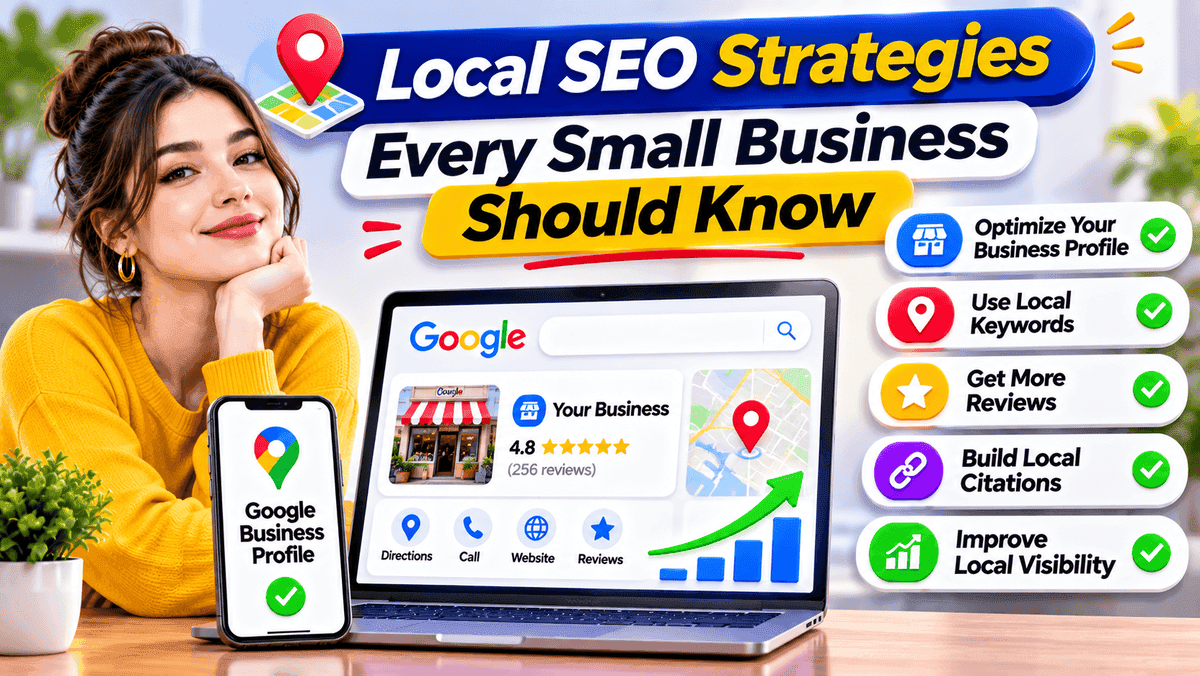
Local SEO strategies are the steps that help a small business show up when people nearby search for what it sells. Picture a dog rolling in mud an hour before a family photo. The owner grabs a phone, searches "dog groomer near me" and compares the few businesses that show up. Accurate details, reviews and clear service information help decide who gets the call. That quick decision is what local SEO is built around, and it covers more than Maps rankings. Accurate details, honest reviews and a website that matches the search all count. Here are ten strategies that work, along with the rules that decide who qualifies in the first place.
Quick Answer - What Are the Best Local SEO Strategies for Small Businesses?
The best local SEO strategies for small businesses begin with a complete Google Business Profile. Next come accurate categories, genuine reviews and matching contact details across the web. Local keywords, useful service pages, schema, local links and helpful content build on that base. Tracking results keeps the work honest. If only one step gets done, make it the profile.
How Local SEO Works - Relevance, Distance and Prominence
Google decides local rankings with three ideas in mind. Its page on how Google ranks local results walks through all of them, and the table gives the short version.
FactorWhat it meansRelevanceHow well the business matches what was searchedDistanceHow far the business is from the searcher or the place namedProminenceHow well known the business looks, including reviews and web presence
Distance depends on where the searcher is, or on the place named in the search. A grooming studio can't move closer to every customer. Relevance and prominence respond to effort, so local SEO work focuses on helping Google understand the business. It also means building a trustworthy presence with accurate details, useful content and genuine reviews.
Before Starting - Is the Business Eligible for a Google Business Profile?
Not every business can have a profile, so this check comes first. Google wants real contact with customers. That means either a place where they can visit or a business that travels to them, like a mobile car detailer or a cleaner. Online-only shops generally don't qualify. A virtual office won't work, and a P.O. box isn't a valid address either.
The name should match how the business is known in the real world. Eligible locations generally get one profile, though Google allows a few exceptions. Duplicates make details and reviews harder to manage. Ten minutes spent here saves hours of cleanup later.
10 Local SEO Strategies Every Small Business Should Use
1. Claim and Verify the Google Business Profile
Take a small pet grooming studio that has never touched its Google listing. A quick search shows a profile already exists, created by someone else years ago. The fix is to claim it instead of starting a new one, because a second listing makes reviews and details harder to manage. Verification comes next. Google picks the method, which might be a call, a video or a code. It shows that the owner is allowed to manage the profile, and some tools stay locked until it's done.
2. Choose the Right Business Categories and Name
Categories tell Google what the business actually does. For a grooming studio, "Pet groomer" fits as the main one. "Pet supply store" can sit beside it if the shop really sells products. Adding "Veterinarian" because it sounds trusted would only blur the picture, and it would mislead customers too.
The name matters just as much. It should match the name customers know in the real world, such as the sign or the website, with no city, slogan or keyword tacked on. Google's guidelines say unnecessary extras can lead to rejected edits or a suspended profile.
3. Complete the Google Business Profile and Keep It Updated
A half-empty profile looks abandoned. Hours, phone number, website, services, products and photos give customers what they came for. Holiday hours deserve extra care, because nothing annoys a customer like a locked door on a holiday with a muddy dog in the car. Real photos of the grooming room and the finished dogs beat stock pictures every time. One handy trick is adding a tracking tag to the website link, so visits from the profile show up on their own line in analytics. A fuller checklist for every section sits in the Google Business Profile optimization guide.
4. Encourage Genuine Customer Reviews and Respond Professionally
Reviews work like word of mouth that never goes away. A good time to ask is soon after the service, while the details are fresh. A short link or a QR code at the register removes the effort. Ask every customer, happy or not, and keep the wording neutral. "How was your visit?" invites honesty, while "Please leave five stars" invites pressure. Payments, gifts or discounts in return for reviews are off the table.
Every review deserves a reply too. A good one is calm and specific, like "Thanks for coming in, glad the coat feels soft." A reply like that also shows other customers that feedback gets heard. Businesses that want help managing their Google reviews can look at review services for local businesses.
5. Keep the Business Name, Address and Phone Number Consistent
NAP means name, address and phone number, and it needs to read the same everywhere. A different suite number on one directory and a missing area code on another can look like two businesses to a machine. Style gaps like "Street" and "St." rarely cause trouble. An old address left on a forgotten listing does.
If a business uses call tracking, the phone setup should follow Google's Business Profile guidelines. The main number should connect customers straight to that location. Extra numbers should be accurate and set up properly.
A service-area business that doesn't serve customers at its address should hide it on the profile. Other directories have their own rules, so those are worth checking before a home address goes public.
6. Find Local Keywords Customers Actually Search For
Customers type what they need and where they are. "Emergency locksmith in Austin" and "dog groomer near downtown" are typical. A free way to start is Google's own search suggestions. Type the service into the search box and see what finishes the sentence. Search Console adds the other half, since it shows which phrases already bring visitors to the website.
Intent matters too. Someone searching "pet groomer open today" wants a phone number and an address, not a long article.
7. Create Useful Service and Location Pages
If the studio also offers deshedding treatments, that deserves its own page with the steps, the dog sizes it suits and photos. A business with several services or locations does need separate pages, but only when each one says something different. A page on puppy first grooms and another on deshedding can both be useful. Ten city pages with the town name swapped out can't. Thin copies add little and can look careless.
Each page needs a clear title tag, a heading that names the service and place, and easy contact details.
8. Add LocalBusiness Schema to the Website
Schema is code that labels page details so search engines read them correctly. LocalBusiness schema, usually written as JSON-LD, can list the name, address, phone number and hours. It helps machines understand the page. It doesn't promise rich results or higher rankings. One rule keeps it clean: the details in the code should match what visitors can see on the page.
9. Earn Relevant Local Backlinks and Business Mentions
A link from a local source tells search engines the business belongs to the community. Chambers of commerce, sponsored events, supplier pages and local news are good places to look. The studio might sponsor a local dog adoption day and earn a genuine mention on the shelter's site. Relevant links from trusted local groups can be more useful than piles of unrelated directory links. Paying for links meant to game rankings isn't worth the risk.
10. Publish Content That Answers Local Customer Questions
Content works best when it answers questions customers already ask. A roofer can write about storm damage in the area. A tailor can explain how long an alteration takes. A pet groomer can post a booking guide for the busy holiday weeks. Posting often matters less than being useful. One solid page beats ten thin ones.
Local SEO for Service-Area Businesses
A mobile car detailer works from a van and a home office. Customers never visit, so a public address makes little sense. A service-area business can hide its address and list the areas it covers instead.
The area should be real, not every town in the state. Google's guidelines say a service area generally shouldn't stretch beyond about two hours of driving from the base. One profile per business is the rule, and making one per town breaks it.
Does Local SEO Help Businesses Appear in AI Search?
AI answers now sit above or beside regular results, and businesses can't control them. What they can control is the raw material. Clear details, a website that search systems can crawl and reviews with real substance all give those tools something solid to read. No tactic guarantees a mention in AI Overviews or any other AI feature. Accurate basics remain the safest bet.
How to Measure Local SEO Results
Numbers show what's working, but they don't explain why. One change shouldn't get all the credit. A better month might come from the season, a local event or a competitor closing.
MetricWhere to checkWhat it tellsProfile interactionsGoogle Business Profile performanceCalls, clicks and direction requestsSearch impressionsSearch ConsoleHow often the website appearsOrganic clicksSearch ConsoleVisits from searchLeads and enquiriesBusiness recordsReal customer actions
A Simple 30-Day Local SEO Action Plan
A month is enough to fix the basics. The plan keeps the work in small steps.
WeekMain taskExpected outputWeek 1Profile audit and eligibility checkAccurate core detailsWeek 2Reviews and directory cleanupBetter consistencyWeek 3Website pages and local keywordsStronger local contentWeek 4Tracking and improvementsA baseline report
Nothing here promises rankings or traffic. The goal is a solid base to build on.
Common Local SEO Mistakes and How to Fix Them
MistakeBetter approachKeywords added to the business nameUse the real business nameDuplicate profile listingsManage one eligible listing per locationPushy review requestsAsk every customer in a neutral wayDuplicate city pagesPublish unique, useful pagesIgnoring performance dataReview the numbers on a regular schedule
Frequently asked questions
Final Thoughts - Start With Your Business Profile, Then Build Outward
Local SEO works best when the basics are right. An accurate profile, genuine reviews, useful pages and regular check-ins add up over time. Nothing here guarantees a ranking. A good next step is to search for the business on Google today and see what customers see.
Growth Specialist
Specializes in helping local businesses maximize online visibility and customer engagement.
About the Author
Sarah JohnsonGrowth Specialist
Specializes in helping local businesses maximize online visibility and customer engagement.