
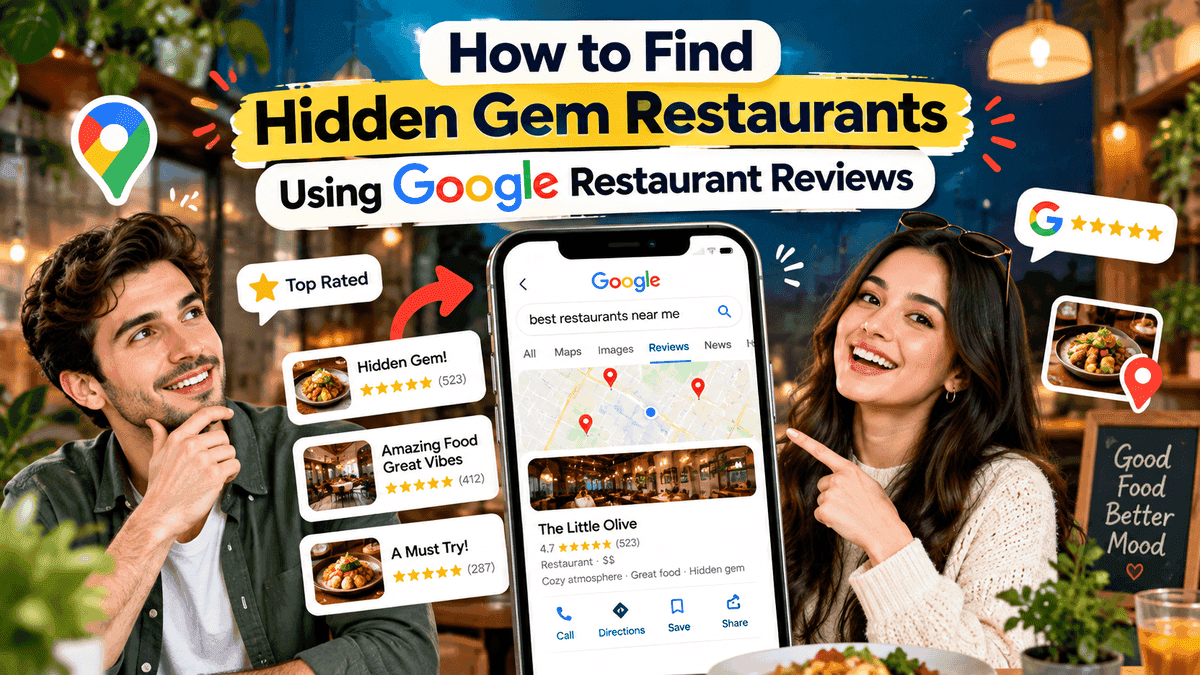
Restaurant reviews are the quickest way to confirm a hunch that some corner of town is hiding a great kitchen. A small room with six tables, a handwritten specials board, a cook who waves at half the customers. Finding it by accident is luck. Finding it on purpose takes practice, and Google reviews happen to be a free place to practice. Read them slowly, the way a local would, instead of glancing at the top three results like a tourist. Stars, photos, dish names and owner replies each drop a small hint. Stack the hints together and the quiet favorite starts to show itself.
What Google Restaurant Reviews Say About a Local Food Spot
A review page looks simple. Dig a little and it holds a detailed portrait of the kitchen, though most diners never get past the headline number.
Why the Star Rating Tells Only Half the Story
A 4.8 sounds perfect. Forty reviews behind it, though, is a thin sample, while a 4.6 built on nine hundred opinions has survived a lot of Friday nights. Big counts also follow foot traffic, so a restaurant next to the train station can pile up numbers without being anything special. Many hidden gems land in a middle band, roughly 4.4 to 4.8, with a few hundred reviews that trickled in over years.
The written feedback matters more than the stars. Look for lines such as "been coming here for a decade" or "my parents brought me here as a kid." One of those beats ten comments that just say "great food!" Regulars rarely write much, so when they do, it counts.
What Dish Photos and Recent Diner Notes Show
Photos uploaded by customers are rawer than anything on a menu board. Look at the plating. Is the portion generous? Does the food look freshly made, or tired under heat lamps? Pictures taken in normal lighting on a normal table are usually the honest ones.
Recency counts as well. A place with glowing reviews from 2021 and silence since may have changed hands. Notes from the last month or two show what the kitchen is doing now, which is the only version anyone will actually eat.
How to Tell a Neighborhood Favorite From a Lucky Rating
Say three places made the shortlist. Now comes the slow part, opening each listing and reading well past the first screen of reviews. Two of the three will probably look fine. The third usually has something extra.
Dishes That Keep Getting Mentioned
Count the repeats. If five separate reviewers bring up the same lamb stew, or the hand-pulled noodles, or a Friday-only special, that dish is probably why the kitchen is still open. Those are the orders to plan around.
Odd specifics are a good sign too. "Ask for the green sauce." "Get there before 7, the bread sells out." Tips like that come from people who go back again and again. Chain restaurants rarely collect them.
Short Menus and Steady Service
A lot of hidden gems print a menu that fits on one page, with a dish name, a price and nothing else. Reviews often mention it, something like "tiny menu, everything good." A cook with five dishes down cold tends to beat a cook juggling fifty.
Service is the other half. Scan reviews for how staff are described, not just once but across months. A single rude waiter happens anywhere. A pattern of warm, remembered-my-name comments says a lot about how the place runs.
Search Habits That Surface Quieter Restaurants
Google Maps does more than most diners use it for. Small changes in how a search is typed end up changing the whole list.
Search by Dish and Street, Not by Hype
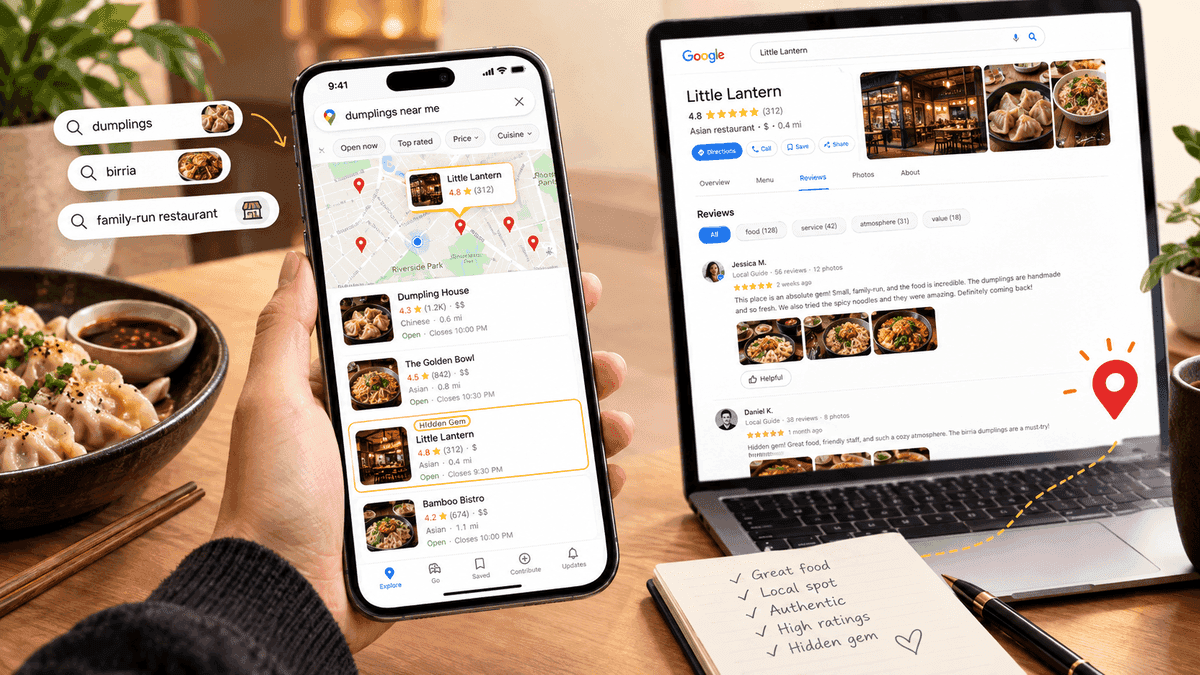
Typing "best restaurants near me" is the lazy route. That phrase feeds the same crowded list to everyone. Narrower works better, like "Oaxacan breakfast" or "family-run Lebanese bakery," followed by a drag of the map into a residential area, away from the main squares. Specific searches pull up smaller kitchens.
The search box inside a restaurant's review section is worth using too. Type "birria" or "dumplings" there and only the reviews that mention it stay on screen. Two minutes of that tells more than the star count ever could.
Keeping Chains Out of the Results
Google offers no switch for hiding chains, so it takes a workaround. Put "family-owned" or "since 1990" in the search. Glance at the name afterward, because the same brand showing up on four corners of the map is a giveaway. Filtering by rating and "open now" trims the list further. Independent places often sit low in the results, so keep scrolling past the point where it feels pointless.
Making Sure the Reviews Add Up Before Booking
A promising listing is still worth a sanity check. Thirty seconds of scrolling beats a wasted Saturday night.
Timing and Patterns in the Reviews
Healthy review histories look uneven. Some weeks have more, some fewer, with a mix of ratings and different writing styles. A sudden burst of near-identical comments in a single week, or a long stretch with nothing at all, is worth a second look.
Variety is a good signal. Real diners write differently. One writes a single line, another writes a paragraph about a birthday cake, a third uploads a blurry photo of dessert. That mess is a sign of a genuine crowd.
Owner Replies Are Worth a Look
Owner responses are underrated. Does the restaurant reply at all? Read a reply to a three-star review. A note like "thank you, the kitchen has changed that dish" shows somebody behind the counter is listening.
Restaurant owners have a stake in all this too. A brand-new spot with nothing on its listing is easy to scroll past, and some owners look into Google review services to help a new profile look established sooner. Others buy Google reviews to give a new listing some early momentum while the dining room fills up, then keep the profile active with thoughtful replies and fresh photos.
Frequently Asked Questions
How can a non-touristy restaurant be found in an unfamiliar city?
Try a specific dish or cuisine in the search box instead of a generic phrase, then drift toward residential streets away from the main attractions. A listing with a few hundred reviews, steady ratings and comments from people who keep coming back is a good sign. Tourist areas produce one-time visitors, so repeat customers stand out.
Are Google reviews better than food blogs for choosing where to eat?
Different jobs. Blogs are good for a story and a pretty photo, but they often cover a single visit and can go stale. Google reviews pile up from ordinary diners, which makes recent ones handy for checking how a place is doing this month. A blog for inspiration and reviews for the final call works well.
Which search terms work best for finding great local food?
Cuisine or dish plus a neighborhood name does most of the work, like "handmade pasta" and the area. Words such as "family-run" or "locally owned" push chains down the list. Inside a restaurant's page, searching a dish name in the reviews is just as handy.
How can a high-rated restaurant be checked for real quality?
Skip the average and read the last two months of comments. Check whether specific dishes repeat, whether recent photos match the menu and whether the owner answers feedback. One glowing review means little. The same praise showing up over several months means a lot.
Why might a popular local favorite have mixed reviews online?
Popular places get busy, and busy kitchens have off nights. Long waits, a slow Saturday or a sold-out special can drag a score down. Some diners also arrive expecting a different style of food than a traditional spot serves. Mixed scores often reflect expectations more than quality.
Finding the Next Favorite Table
Finding a hidden gem is mostly patience and a bit of detective work. Read past the stars, then look for the dish everyone keeps naming. Search narrow and see how the owner talks back. A few rounds of that and the habit sticks. Somewhere on the map, between two places everyone else walked past, the next great meal is probably listed already.
About the Author
Sarah JohnsonGrowth Specialist
Specializes in helping local businesses maximize online visibility and customer engagement.